Saturday, 31 October 2015

Research - Sub Cultures

Sub Cultures 

Sub Cultures

Sub cultures are groups who are united through common value systems and tastes e.g. clothes, music, politics etc. A group who are also positioned outside of the mainstream culture.

Generally:

-Conformity and rebellion
They do not like conformity. They like to rebel against common values and systems.

-Attitude to capitalism and consumerism (Are they materialistic)
Do not follow capitalisation. Have their own set of rules and behaviour conduct.

-'Tribal/gang' rivalry with other groups in society
Dont like mixing. However, traditionally, they have stereotypes they do not like.

-Traditional ideas or 'neophyte' (new ideas)
Have their own traditional beliefs in the way they should live their lives.

Each and every sub cultures music interest varies  depending on the dub culture but generally they all interest niche but different genres of music.

McCracken & The Birmingham School


McCracken said that the post modern world is full of diversity, dynamism and creativity.

If we look at the array of values, and ideologies then we can't say all sub cultures come from the same culture.

McCracken believed that all sub cultures are of different races and come from different cultures.

The Birmingham school assumes that all sub cultures come from one culture (reaction and rejection to mainstream) therefore this contradicts McCracken.

Dick Hebdige

Although some people think sub cultures appear to be different, deep down they are the same.

'Sub cultures' are 'little cultures', as they are all doing the same thing of resistance.

Hebdige also contradicts McCracken as he goes along with the Birmingham School and believed that although the little(sub) cultures have different beliefs much like other cultures, they were still part of one and the same culture.


Consumption:

-Consumption is an active process in which different audience read into the same cultural product.
-Many groups are involved in protest and resistance against the mainstream.
-People can resist mainstream culture and become a 'subculture'.

Music & Youth cultures
  • Subcultures and music came about post war (50s and 60s)
  • Consuming music is a process that differs from person to person. This is evident in todays society.
  • Social background can lead to different readings of the same song due to different beliefs and views on different ideas.
In relation to Dyer's Theory...

Stars represent shared cultural value and attitudes, and will promote a certain ideology. For example, an artist who contributes themselves to charity work will promote the idea of charity and create a positive response by audience making them want to do charity work. Fans who agree with that set of values will tend to support the star which will result in the fans imitating stars in 'aspirational' effort in as a way to get 'closer'. e.g. they may copy the stars fashion trends, style, behaviour etc.

Overall I mainly support the Birmingham School and Hebdige's idea of sub cultures and 'little cultures' belonging to one culture. Although I do understand why McCracken states that subcultures can be classed as other cultures due to their cultural ideologies and different beliefs. This research has allowed me to identify sub cultures and how sub cultures can be used to target a specific audience for different genres of music.



Research - Richard Dyer's Theory

Richard Dyer's 'Star theory'...

The term 'star' refers to the set of meanings constructed around singers in order to sell their music to a mainstream or loyal audiences but mainly mainstream due to the outcome of financial gain.
In Dyer’s book ‘stars’, he suggested ‘’that a film star’s image is composed by four different types of  ‘media text’: promotion, publicity, films; and criticism and commentaries. 
Richard Dyer’s ‘star’ theory is the idea of icons and celebrities having to be constructed and manufacture by institutions in order to have financial gain. Dyer defined what made a star within the film industry as a star having set meanings to their name in order to successfully sell the performer on a larger platform.
All stars have their own image in which this is the image that people can see in their head when we think of them. This is usually what the audience would see the star as, in which they are often recognised by their character in films. Quoted from his book 'Stars' - ‘’Dyer tends to favour ‘star image’; other theorists, however, refer more frequently to either ‘star persona’ or ‘star text’’. 
Dyer said; 
''Star image is incoherent, that it is incomplete and open...''
''Star must be simultaneously ordinary and extraordinary for the consumer.''
''The star must be simultaneously present and absent for the consumer''
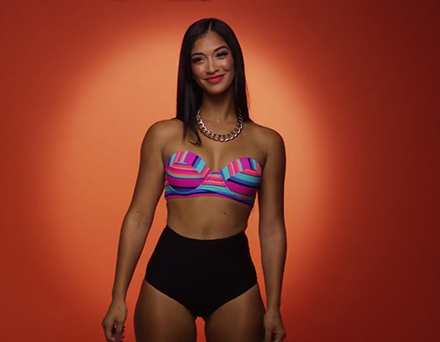
Artist can be classed into two categories; either a performer or a pop 'star'. A performer is an artist who may or may not be famous and only cares for performing music whereas a 'star' is artists who's image haas been constructed to a certain audience. Meaning an artist image, music, portrayal in the media has been manufactured by their record label giving off the same and repetitive material to a target audience in order to repeat the their successful method of financial gain. For example Kehlani is an up and coming artist who is famous to mainstream audiences and is seen only tends to perform and care about the music whereas 'star' performers such as Tinashe, have created a mainstream image for themselves targeted to a specific audience.


Identifying an a 'star'

A star can be recognised through four elements;

-Stars and constructions
Audiences can identify the change in image of the artists for example, fashion trends and overall aesthetics or style/genre of music etc. This can be identified if or when their is a change in the artists career.

-Industry and audience
An artists record label can define a performers position and career in the industry as a record label can be known for signing successful past and present artists. For example, Jive records are known for signing Britney Spears, Chris Brown, Justin Timberlake etc. This then gives them additional recognition and a set audience just because of the record label. Record companies, identify, sell and produce the same, the same material!

-Ideology and culture
Stars can also be identified through their lives outside the music industry. This can be easy through the media especially social media due to it being such a wide platform and nowadays is one of the top methods of viewing up to date news. Artists ideologies and mindset can be judged by audiences such as if an artist is seen supporting charity work the audience would respond positively and support that artist whereas if an artist is seen acting deviant and reckless, the audience would respond negatively and neglect that artist. Audience interest enhances these values to enhance their 'star quality' and create their star persona.

-Character and personality
An artist overall character and personality can also be judged by the audience. This can be identified through social engagement, which is seen through social events, collaborations, interviews etc.
The star is a construct, but the construct that has a foundation of realism. stars provide audiences with a focus for the idea of what people are supposed to be like.

Although Richard Dyer's star theory focus' mainly on the performers in the film industry, it can be applied also to artists in the music industry, which i have done above, after researching and further developing my knowledge of Dyer's 'star' theory. This has also allowed me to further understand how stars can be identified and how they can be classed as stars. 


Sunday, 11 October 2015

Research: Star Image

'Star Image'

What is 'Star Image'?

Star image is the way an artist is represented to the audience. The most effective way to do this is through music videos as this can be reached to a mainstream and international audience. Music videos can express star image due to it being a visual platform and can make it easy for the audience to identify a different ideologies and a clear understanding of a stars image in the music video.

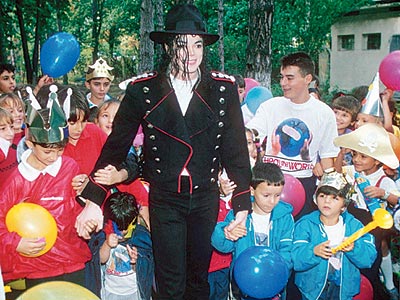
Throughout this research, I am going to express Michael Jackson, 'The King of Pop's' star image which had various changes through his career.

'The Jackson Brothers/5'

In 1964, the Jackson Brothers recruited their youngest sibling, Michael Jackson to their group to become a back up singer and musicians. After Michael started sharing leading vocal with his brother the group then officially changed their name to 'The Jackson 5'. This was the very beginning to Michael Jackson's stardom which his career jumpstarted accompanied by his 4 brothers in a American pop group. Michael Jackson being the youngest of the group, was also the star image of their group due to his lead singer role and also being the most favoured by audiences due to him being 'cute' and favoured by audiences. The star image of Michael Jackson here was starting to be identified through the group number 1 hit singles including 'I Want You Back' & 'lll Be There'. 


Michael Jackson's teen life; Still in 'Jackson 5'...

The group then signed with Epic Record Label and became 'The Jacksons'. During late 70s and early 80's the Jackson success continued through 6 more number hit records and also with the solo act of Michael being starred in the 1978 African American remake of 'The Wiz' which created a wider audience for Michael Jacksons name itself. Michael's solo career was taking off as he was working with legendary Quincy Jones and help create his own number 1 hit records including ' Don't Stop Till You Get Enough'.

Michael Jackson 'Thriller'

Michael, still not having officially left 'The Jacksons' he went on with his solo career to create a short film/music video for his song 1982 'Thriller' which became part of 'The Best Selling Album of All Time'. This short film set a legendary mark on the industry due to the unique idea at the time of creating a short filmed concept to a music video. This by itself won Michael 7 Grammy's and 8 American Music Awards. Michaels star image by himself was skyrocketing with the 'Thriller' album due Michael taking music videos to the next level, other hit songs such as 'Billie Jean' and 'Beat It' and also a duet with Paul McCartney who was also a top star at the time. From the Thriller music video itself, Michael has created an image for himself which audience can identify him as the zombie transforming star.


Michael Jackson and plastic surgery...

In 1983, Michael Jackson reunited with his brothers on a live television performance which everyone was able to see that Michael was clearly the one who stood out from his brothers and had the most star image. His 'star image' was then immensely boosted through another breakthrough and legendary mark on the music and even dance world with his debut of his traid mark dance move 'The Moonwalk'. There were then Michael Jackson rumours of MJ's hair lighting on fire and news spreaded that his hair actually did light on fire when shooting a Pepsi commercial with his brothers. His recovery included some plastic surgery which was said to be that Michael had an immediate addiction to plastic surgery which audiences saw a clear difference in his skin and looks.


Michael Jackson accusations...


During the mid 1980's Michael Jackson's appearance was just the start of the public criticising his name. Later on, during the late 90s and early 2000s, cases of pedophilia were turned against him which one of these accusations are a very mainstream rumour due to him buying property and creating 'Never Land Ranch'. Rumours such as 'MJ made this theme park to lure little children to him' were made against Michael which made some audiences turn against their interest in his name. There were also leaked pictures of Michael holding a baby over a balcony which also made audiences see him as a bad influence on younger generations. Although MJ was at a diminished time of his career, he was still releasing hit songs to to keep up his image. The releasing of these songs helped take away the idea of negative accusations from his name which is a method used in the music industry to increase star image.

His uprising...


In the late 90's and beginning of 2000's MJ's negative views to his name were starting to fade away and he was still releasing hit songs which were at the top of all charts. These songs included 'Earth Song' and also the release of his 'Bad' album in 1997 which was such a huge success, not bigger than 'Thriller' but was one of the most hyped albums at the time with several number 1 singles. This uprise made all audiences all over the world realise again his name and that he is still 'The Top Artist'. The industry, loyal fans and even other mainstream artists were also starting to realise which lead on to labelling MJ as 'MJ, The King of Pop'. 


Conclusion:
As we can now see, star image can vary/differ throughout the years in an artists career and Michael Jackson is a clear example of this. His ups and downs in his career can be very similar and relatable to other mainstream and successful artists such as Chris Brown, Beyonce, Jay Z, Britney Spears, Kyle Minogue, Usher etc. Star image is either seen immediately or can be created through various methods of constructing an artist so they can break records and have success in the industry.


Research: Intertextuality

 Intertextuality...

What is Intertextuality?

In many music videos you will find there are often links to other films, TV programmes or other music videos etc. This is also known as 'intertextual references', which these references can be expressed visually or lyrically, usually to refer to certain ideologies, past or current events and sometimes other celebrities. The slightest things can be classed as an intertextual reference for example, lyrics referring to other artists which only lasts a couple seconds in the song. A music video can also do this by displaying a quick image referring to an event.

In class, as a group, we analysed George Michael's - 'Shoot The Dog' music video; was a cartoon animation which is easier to create intertextual references. Throughout this music video we were able to identify a wide amount of intertextuality which we understood was George Michael's personal views on past and currents situations with the UK and US at the time and also a portrayal of his own persona varying throughout his career in the music industry. This is a list of what we identified:


  • The Simpson's TV programme 
  • Government officials such as the Queen, President and Prime minister.
  • Nuclear warfare
  • Poppy day
  • David Beckham and Paul Scholes (World Cup)
  • America taking land from the UK
  • Cowboys vs Indians
  • Current government, internal affairs
  • Modern day trends and styles
  • Saddam Hussein
  • Trevor McDonald
  • Bush being portrayed as 'dumb' and George Bush's 'bitch'

Another example of intertexuality in music videos would be Eminem's - Just Lose It which also has many intertextual references throughout. A huge reference Eminem created in this video was the idea of Michael Jackson's hair setting on fire while performing in which Eminem exaggerated this idea and made it parodic. His parody of this idea made his imitation of Michael Jackson either funny or very offensive to his fans.


Another intertextual reference that was recently hyped about was Ray J's - 'I Hit It First' music video which portrayed his own relationship with Kim Kardashian. The lyrics stand out immediately even through the title of 'I Hit It First', which this song was said to be a 'diss track' to Kanye West as he is now dating Kim Kardashian after Ray J and Kim Kardashians sex tape had been released. Ray J then created a music video to this song in which we can identify that he casted a female that looks very similar to Kim Kardashian. This itself is an intertectual reference and throughout their are aspects such as the edits of being filmed by a cam recorder to connote the event of their sex tape.


Artists use this idea to appeal to an audience because...

  • Personal/audience entertainment
  • Gives a clearer understanding of the artist and their views.
  • Expresses the Artists own views on social or past events
  • Tells the artists story
  • Original music video concept

Why this can be criticised by the public...

  • Controversy
  • Some audiences can be offended by some of the ideas and visuals
  • Spreads negativity to the public
  • Can influence a younger viewers understanding thoughts
  • Can offend other artists in the industry
Overall I think that intertextuality in a music video can boost the interest and entertainment to the views due to the excitement in exaggeration of those events or ideas portrayed in the visuals. I can look forward to creating my own intertextual references when I create my own music video because now I known what is need when create intertextuality. I am also considering to use this due to the simple idea of boosting entertainment in the visuals.


Friday, 9 October 2015

Research - Laura Mulvey's 'Male Gaze'

Laura Mulvey's Theory..

The 'Male Gaze'

The 'Male Gaze' is simply how an audience views woman usually from a a heterosexual males perspective. This theory tends to exaggerate the males perspective when viewing women due to the over use in promiscuity in young attractive females used in music videos.

For feminist, it can be thought of in three ways:
- How men look at woman
- How woman look at themselves
- How woman look at other women

Benny Bennasi's 'Satisfaction' portrays a clear example of Mulvey's theory and also the three ways which this video is seen by females.


How men look at women - Men would find the visuals of the attractive skin revealing young women, dressed promiscuous, very seductive and pleasurable. This method of attracting male viewers is widely used across many artist in the industry both niche and mainstream which this is natural to most audiences because as a spectator we are so used to this type of visuals.
How women look at themselves - Some women would embrace the fact that they are beautiful and favor the idea of showing of their assets. They would be very aware of what they're trying to portray but still like to show off and look beautiful. They can also look at themselves as just modelling.
How women look at other women - Some women can enjoy the visuals of other beautiful women and embrace the idea of femininity although other would disagree and look at other woman as 'selling themselves just for money. Women can also understand that it is just a job and much like modeling, which most people don't take notice of that it is just like posing in a music video.


Mulvey's theory also focuses on what specifically attracts the heterosexual male. The camera usually lingers around the female assets which thee include; boobs, ass, face, lips, waist, stomach, legs, hair, back etc.


Many videos also use the phallic technique of women using objects in a seductive way to exaggerate the promiscuity which creates more attraction to the heterosexual male audience.


Mulvey's Theory; Criticism...

- This seen mainly through the heterosexual perspective
- Doesn't take in the views of females and homosexuals
- There is no female empowerment
- Woman have conflicting opinions that are not take to consideration
- Biased! Only focus on woman in which men are sometimes used with the same purpose in music videos.
- Exposed to non-interested viewers

Genres:
Genres rely on the 'Male Gaze are mainly mainstream genres such as R&B, Hip Hop, Pop, Dance, Rap, Dance, Bashment etc.
Artist who are known for applying 'Male Gaze to their music videos and examples; Trey Songz - Foreign, Chris Brown - Strip, Sean Kingston - Beat it, Nicki Minaj - Anaconda, Tyga - Hookah, Rihanna -  Pour It Up etc.

Genres that don't usually include or rely on Mulvey's theory are more niche genres such as Rock, Ambient, Chill, Classical, Jazz etc.
Trey Songz - Foreign


Rihanna - Pout It Up


Sean Kingston - Beat It


Overall, I think that Mulvey's theory is widely use all over media, not just the the music industry but also the film, TV industry. The idea of the camera lingering around female assets is a key technique of filming, when wanting to connote or portray a sexual or seductive ideology. Now that i have developed my understanding through my research of Laura Mulvey's 'Male Gaze' I believe I can now recreate her theory in the future, when I create my own music video.

Monday, 5 October 2015

Research - History of Music Videos

History of Music Videos...

For the past 100 years there has been a huge development in combining visuals with singing music in which the music industry and audiences today still argue what or who really created 'The First Music Video''. This has been an argued top for decades due to visuals matching music but the purpose and platform of these videos contradict the generic conventions of  'an actual music video'. 
I will be discussing in chronological order, these contradictions to what videos are or can be classed as a music video and what is argued to be 'The first ever Music Video'.


1920's..

1929; Songs & Moving Images

Bessie smith appeared in a two-reel short film called Saint Louis Blues (1929) featuring a dramatized performance of the hit song. This was the first ever video to have lip syncing due to the media platform being a film. This two-reel short film was used to promote a film, even though this is not a music video it has many similarities and elements of a music video.


1940; Songs& Moving Images

In 1940, Walt Disney released Fantasia, an animated film based around famous pieces of classical music which contained a mix of today's known Disney classic characters. This video contained various amounts of inter textual references to different shows and characters in the Disney franchise.


1920's - 1940's
  • Many films were in the development of accompanying moving images in these films, especially animations.
  • These were not considered as music videos but just basic editing of images to films/musicals which was a big genre of film during this period.
  • Many films during this time period sometimes included live acoustic or acapella music in which viewers today would agree or disagree that these scenes would be classed as music videos.

1950 - 1960's 

1956: Tony Bennett is filmed walking in Hyde Park London for his song 'Stranger in Paradise'. The single/video was distributed on US and UK television, leading Bennett to claim he made the first music video.
This video had international distribution in the biggest music televised countries. This was hyped instantly and is also an argument on whether this is the first ever music video.

1964: Key moment; The Beatles 'A Hard Days Night' was The Beatles first ever releasing of music being accompanied by visuals. This video arguably set out the basic visual vocabulary of todays music videos, influencing a vast number of contemporary musicians at the time to create similar moving images to accompany their music. 


Although this video has some similarities to the elements of a music video, The Beatles soul purpose is not the conventional promotion or advertisement for an album or to gain more financial success whereas this videos purpose was only to promote their upcoming tour which is very unusual to be the purpose of 'a music video'.

1966 - 1968: 

'The Monkees'

'The Monkees' was a TV show. Each episode included a specially made film segment that was created to accompany their songs that was used in their TV series. This allowed The Monkees group to promote their music and allowing the music industry to identify their potential which made them an official music band which gave them a name in the industry which helped them produce more music for their main purpose of just music.


Short segments like this were used in every episode to end the episode which contained some basic conventional visuals that are often used in basic music videos. This is why 'The Monkees' songs, feautured in these episodes were also argued that these were opinionated to be one of the first music videos.

1966: The Birth of Top of the Pops


The importance of TOTP to promote a single meant that artists had to compete for air time as TOTP had a limit on the number of performances it showed therefore if you were an artist and made it on to TOTP's you were classed as one of the biggest artist after being aired on this station because they only aired mainstream artist and only artist that already had a name for themselves.

1967: These videos used the techniques borrowed from film, such as film effects, dramatic lighting, camera angles and rhythmic editing.


Modern Era of Music Videos!

1975: Queen's 'Bohemia Rhapsody' the modern music video..


  • This video was created to replace a live performance on TV
  • The Beatles had created videos, however Queen were specifically for that song to be played on TV.
  • Bohemian Rhapsody was the first made on the 'vide' format therefore, the ''first music video'' would be accurate, as long as it isn't confused with ''first promo film''
In my opinion, this video contained many aspects of a music video which could be classed as the first music video in other viewers perspective although I think that this isn't the first music video due to their purpose only creating a video for their fans just because they didn't perform live, as according to their plan.

1970 - 1980
  • The key development of the modern music video was video recording with an editing process.
  • High quality videotape recorders and portable video cameras were now developed and enabled many pop acts to produce promotional videos quickly and cheaper, rather than just using film which was rather expensive.
  • By the mid 80's, releasing a video to accompany a new single had became standard in which this time period became a huge development in the evolution of technology in the music industry. 
  • Artists were using high budgets to create these, for example 'The Jacksons' - 'Blame it on the Boogie'
This video, during the 80's; because 'The Jacksons' were so famous and were very successful at this time period, they could afford to create such a high budget music video with the use of graphic edits in sync with movement. This video has all the elements of a conventional music video in the pop genre which is simply evident with the use of green screen as todays audiences now know that the Pop Genre is known for their consistent use of green screen.

1981: MTV launch and development of music videos

MTV was launched and the first expected music video to be aired is Buggles 'Video Killed the Radio Star'.


In the early mid 1980's artist's started to use more sophisticated effects in their videos, and added or plot to the music video.
This video was instantly hyped about after release because of the harsh lyrics, clear in the title 'Video Killed the Radio Star' being ironic for the first song to be played in the launch of MTV.


1984: Michael Jackson's 'Thriller' and the concept of short film.
  • A short film in the music industry is a music video longer than usual duration time that has a beginning, middle and end. 
  • MJ's Thriller took the music video format to another level with the legendary breakthrough of creating short films with a narrative to relate to the music and video in the pop industry. This is one of the reasons why MJ is classed as 'The King of Pop' due to his distinctiveness in style and what he brings to the music culture.
  • TOTP started to censor video content, so another approach was to produce a video that would be banned or edited and so using controversy and publicity to promote the release. Early examples of this tactic were Duran Duran's ''Girls on Film''.
1980's; MTV and Musical Success.

  • Music video would, by the mid 1980's, grow to play a central role in popular music marketing.
  • Madonna, owned music marketing of her success to the skilful construction and seductive appeal of her videos.
  • Although many see MTV as the start of a 'Golden Era' of music video and unparalleled success of a new art form in Popular Culture whereas others see it as hastening the death of the true musical artist because true physical appeal is now critical to popularity to an unprecedented degree.

Research - Diversity Of Music Videos

Diversity Of Music Videos...

What are diverse music videos?

Diverse music videos are usually videos with a more distinctive narrative or concept which separates itself from the mainstream productions although these type of videos tend to be more concept based. Diverse music videos being so unique would then tend to attract more of the niche audiences and would be neglected from the mainstream audiences. The videos can also be misunderstanding in which the idea of the music video could be mistaken as offensive leading on to being a controversial music video.  

What types of genres usually go for this?

The music genres that tend to create more distinctive music videos are genres such as Rock, Alternative and Dance because these genres are very diverse in which they don't relate to mainstream audiences therefore these genres would suit a diverse music video as their music would match the visuals.

Chris Cunningham:

Cunningham made his directional debut in the music industry in 1997 with the music video 'Come to Daddy' by Aphex Twin which was immediately banned in some countries due to the controversial content and also hyped about in the industry and by the audiences.
He won the award for Prix Ars Electronica - Digital Music
Bjork - All is Full of Love

  • Bjorks ''All is full of love'' won multiple awards, including MTV Music Video Award for Breakthrough Video and was nominated for a Grammy for Best Short Form Music Video.
  • This was also the first ever music video to win a Gold Pencil at the D&AD awards
  • The distinctiveness narrative and visuals of this video had caught many audiences attention due to the unusual love story between robots.
  • There is some star image of the female robot as the camera consistently focuses on the female robot with various close ups and different angled shots.
Aphex Twin - Come To Daddy

  • Aphex Twin - 'Come To Daddy' is said to be his directional debut due to the instant hype and success around the music industry.
  • This song itself is also said to be Aphex Twin's top tracks which the addition of a great music video increased the success of this music video.
  • This made mainstream artists recognize the potential in his work which was very distinctive.
  • There is no star star image here as this video was more concept/narrative based than performance based.
Aphex Twin - FLEX


  • Cunningham's work for Aphex Twin's  'FLEX' exaggerates his style of work due to the very distinctive visuals of a naked man and woman embracing and cuddling each other, then attacking each other with the result of ending in sex.
  • This very unusual music video which the lyrics are not relative to the visuals although the music sometimes matches the visuals with the fast edits combining with the up tempo music
  • There is star image here equal to both male and female as the performance based video focus' on the narrative of the two characters relationship.

Michel Gondry:  

Michel Gondry is known for his work being mainly of a concept base with the use of some performance but never narrative. His work, much like Cunningham, is very distinctive but his visuals are more attractive to the mainstream audiences whereas Cunningham's work is distinctive to the extent that it only attracts niche artist and audiences of the less mainstream genres of music.
Gondry has helped gain interest in both mainstream and niche artist such as Kylie Minogue, Gary Jules, Daft Punk, Paul McCartney, Kanye West and even Bjork, who is known for her collaborations with Cunningham as well as Gondry.

The White Stripes - Hardest Button to Button


  • The first video i have seen from Gondry's work is 'Hardest Button to Button' by The White Stripes in which throughout the video consisted mainly of one point of Goodwin's theory of the relationship between music and visuals. This song consists mainly of a basic drumbeat in which Gondry uses to adapt to his style of visuals with the edits of adding a drum to the visuals, 'hitting the beat' every time.
  • This has no narrative and no star image which is expected from Gondrys work although it is very concept heavy.

Gary Jules - Mad World

  • The next Gondry music video i looked at was Mad World by Gary Jules which was very successful and hyped about instantly, both song and video.
  • In this video we mainly see an aerial shot from a rooftop where Gary Jules is standing and the camera shows his point of view watching an in sync performance of what seems to be children, creating animated figures on the sidewalk below.
  • This video contains mainly a performance base with the children creating animated figures relate to the lyrics of the song.
  • The video has no star image and also has a clear relation between music and visuals with the calm tempo of the song and slow movement of the performance.

Daft Punk - Around The World


  • This song was instantly hyped about and was said to be one of Daft Punks best tracks. This music video gained even more success to Daft Punk after the release of this music video.
  • This was very low budget and as we can see from the use of one background set with dancers in cheap costume with the addition to the set of stairs and a podium.
  • The dancing is very basic and performance is nothing spectacular which is very unusual due to the convention of music video dancing is always 'trying to impress'.
  • This distinctiveness in bright scenery and basic performance is one great aspect to Gondry's style as even though the use of dancers were poor, and basic cinematography, Gondry is still able to catch the audiences attention and give them an attracting viewing.

''Diverse music videos should stay away from mainstream music culture''

The audience and institutions of the music industry argue if diverse music videos should avoid the mainstream genre. This is evident in the feedback from the audiences of mainstream artists trying to experiment with diverse music videos e.g. Kylie Minogue - Come Into My World; was very distant from the expected conventions in mainstream music videos which was risky in expecting the usual successful feedback from the audience. 
I believe that diverse music videos should maintain within the mainstream music culture due to artists may wanting to experiment with a different style to their own persona and also try to create another image of themselves. Diverse videos can be used to help gain hype due to the unusual and distinctive visuals that most audiences are not used to seeing.

Gathering all this research on 'diversity in music videos'; i have been able to identify the generic conventions and distinctive components used in the examples of Chris Cunningham and Michel Gondry's music videos. It seems that diverse music videos tend to have a very different set of visuals every time with many differences and not much similarities to other diverse videos. I can also now identify what differentiates a diverse music video to the expected, conventional mainstream music video.